







Welcome back to another special crossover episode! This week’s episode is actually from The Next Wave podcast.
In this action-packed episode, Matt Wolfe and Joe Fier dive into the explosive showdown between AI company Anthropic and the U.S. government, a story that’s sending shockwaves through both the tech and policy worlds. They break down why Anthropic is drawing a hard line on surveillance and autonomous weapons—and how that’s causing serious friction with the Pentagon. You’ll hear the latest news, behind-the-scenes drama, and what this could mean for the future of AI accountability.
But it’s not all serious talk. The duo also roll up their sleeves to test Google’s brand new NanoBanana 2 image model. Expect real-time demos, fun creative challenges, and a look at how this technology can supercharge everything from YouTube thumbnails to AI-generated infographics. Plus, they round things out by exploring the new wave of AI agents and even take a nostalgic detour into Joe Fier’s days working at Burger King—and how fast food is embracing AI assistants.
Table of Contents
ToggleAnthropic vs. The Pentagon: A Battle Over AI Use in the Military
Anthropic, the makers of Claude, became the only U.S. company trusted by the government to work with truly secret, classified info. That all changed when a $200 million contract with the Pentagon and Palantir put Anthropic’s tech at the center of a dangerous argument.
The spark came after news broke that Anthropic’s AI helped in a real-world mission involving Venezuela’s former president, Maduro. When Anthropic asked the Pentagon how their AI was used, U.S. officials got upset. The real tension boiled over when the Pentagon demanded full access to use Anthropic’s AI for anything they wanted—including surveillance of U.S. citizens and fully autonomous weapons.
Anthropic replied with a firm “No.” They drew the line at two specific cases:
- Mass surveillance of U.S. citizens.
- Autonomous weapons with no human in the loop.
Takeaway: The U.S. government considers these limits “unacceptable.” That’s a scary spot, as Matt Wolfe said—these aren’t minor rules; they hit at the core of rights and the future of war.
If Anthropic doesn’t back down, the Pentagon says it will blacklist them as a “supply chain risk,” something that’s never happened to an American tech company. All companies working with the government would need to stop using Anthropic’s tech, disrupting deals with giants like Boeing and Lockheed Martin.
Key Quote:
“They basically have already come out and said, look, we’re not going to pull away on this. We’ve already made our decision. We’re not going to allow you to do those two things.”—Matt Wolfe
How the Government and Tech Companies Clash on AI Boundaries
On one side, government officials and military leaders argue that Silicon Valley CEOs shouldn’t decide military strategy. They want the freedom to use whatever tech works, with no private company limits. Industry leaders from Palantir and Anduril agree—AI companies should “take a back seat” and let the government call the shots.
On the other side, the public and many in tech want strong guardrails. People worry that surveillance and “judge, jury, and executioner” AIs will spiral out of control, especially since AI is still flawed and can “hallucinate” facts. King’s College London ran war simulations showing that different AIs from Anthropic, OpenAI, and Google went to nuclear war 95% of the time—proving that these models aren’t ready for high-stakes combat.
Key Takeaways:
- Anthropic offers to work with the government for semi-autonomous weapons (with a human in the loop) and to help improve system safety.
- The government pushes for full control and threatens to use laws like the Defense Production Act to force Anthropic to remove safeguards.
- The debate is split: Should AI companies have any say in how their models are used, or should it be government only?
- Elon Musk’s XAI reportedly told the Pentagon they’d allow almost any use, including for surveillance and autonomous weapons.
Nanobanana 2: Google’s Fast, Accurate, and Free Image Model
Google just released Nanobanana 2—and this model is crazy. Built as an upgrade over Nanobanana Pro, Nanobanana 2 generates high-quality images twice as fast—about 15 seconds instead of 30—and gets even better at adding real, correctly spelled text into those images.
- Nanobanana 2 is free inside Gemini.
- You get research-based, grounded images—so if you ask for an infographic, the AI actually does some research, then creates the image with up-to-date info.
- The model handles prompts even better than the previous version; you can style your images using new “style references.”
- You can even get 4K images if you use AI Studio (paid tier).
Our tests showed Nanobanana 2 is as good as Pro for most uses, faster, and easier to access. The only catch—if you use it for something like a detailed map, sometimes it gets locations and facts a bit mixed up. Always double-check important info!
Fun with Nanobanana 2: Speed Tests, YouTube Thumbnails, and Real-World Examples
I put Nanobanana 2 through its paces, running speed and quality tests, trying different styles, uploading my own headshots, and even prompt engineering YouTube thumbnails. The results come fast, the images look great (especially for sketches, infographics, and playful designs), and it’s super easy to use.
Matt showed his own workflow: generating assets (like a headshot with bananas, of course), then editing them together in Canva for the final thumbnail. Nanobanana 2 makes a perfect “parts maker” if you want creative, unique elements for stuff like videos, presentations, or marketing.
Main takeaways:
- For creative projects, Nanobanana 2 makes assets you can plug into your workflow.
- Some details, like maps or timelines, still need fact-checks.
- Direct API/AI Studio use gives the highest image quality.
- The tool gets smarter if you’re specific and persistent with prompts, and you can edit images with follow-up instructions.
Useful features:
- Style picker for unique looks.
- Built-in research for accurate topics (mostly).
- Free and fast for most Gemini users.
AI Agents Everywhere: From Perplexity Computer to Notion and Beyond
2024 feels like the year of the agent. AI agents—mini digital workers—are now being built right into the software we use daily.
Big update: Perplexity Computer launched as an AI assistant in the cloud. This tool picks the right model for the job (Claude, GPT, Groq, Gemini, etc.) and can connect to your email, Notion, Slack, and more. You just tell it what to do—no technical setup, no messing with keys. Currently, it’s for Max subscribers ($200/month), but tools like this are only going to get more affordable and easier to use.
Other platforms making progress with AI agents include:
- Notion: Launched an AI agent for organizing, generating, and summarizing content.
- Manus (acquired by Meta): Working on advanced agent tech.
- Cursor: Can now build apps while you sleep and records video of its own process so you can review it step by step.
- Anthropic’s Cowork: Added scheduled task support and tighter Slack integration.
Key lesson: You no longer need to know prompt tricks. Give your agent some clear background, tell it what you want, and let it do the rest—even on repeat.
AI at Burger King: PATTI, Upselling, and the Employee of Tomorrow
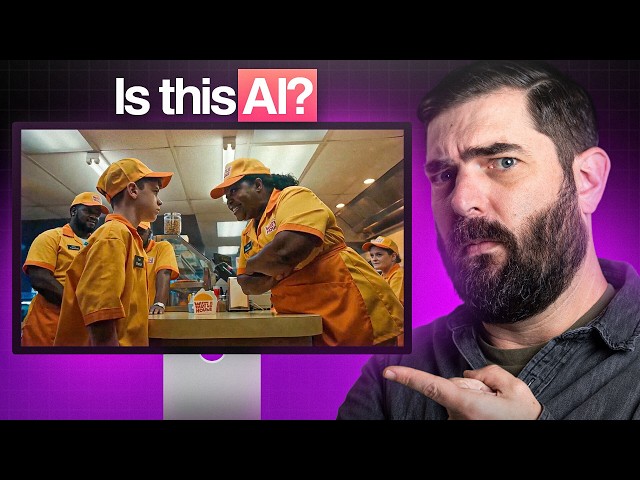
Fast food is no longer just about burgers and fries—Burger King rolled out “PATTI,” an AI voice assistant for employee headsets. PATTI tracks friendliness (“please” and “thank you” scores), watches inventory, helps answer menu questions, and can even remove items from every digital board once they run out.
Real-world tests show that with PATTI, employees can focus on customers and core jobs, while the AI handles reminders, upselling, and kitchen updates. It also means training speeds up—rookies get menu help right through the headset.
Powering the system is OpenAI’s tech. Already 500 restaurants have PATTI, with rollout planned to 7,000 by year end.
A funny (and a bit worrying) side effect: If PATTI says you’re not being polite enough, expect a chat with your manager—or, in the not-so-distant future, maybe even be at risk for firing. AI is watching.
AI Video: Feature-Length Films and the Dorr Brothers
AI films made another leap this week. Creators like the Dorr Brothers are posting 15-minute feature-length shorts powered by AI—complete stories, recurring characters, and even guest appearances from people like Logan Paul himself (who did the voiceover).
The Dorr Brothers take AI slop and flip it on its head by investing time and effort to add story, structure, and style. Their latest “AI phenomenon” video made the rounds with millions of views and a share on Joe Rogan.
Main takeaways:
- Good AI video is about workflow, story, and editing as much as prompts and models.
- Copyright won’t apply to fully AI-generated films, at least for now—creators are free to remix and share.
- Traditional roles (editors, animators, etc.) may get replaced by a new “AI creator” who runs prompts and post-edits the results.
Takeaways, Quotes, and Must-Know Resources
This week proves AI is everywhere—and its impact stretches from Pentagon war rooms to YouTube to who’s making your Whopper. Anthropic’s fight with the government isn’t just a court drama; it’s about shaping the rules for every company and consumer who uses AI.
Key takeaways:
- AI models are only as safe and ethical as the companies who make and manage them.
- Government and private tech are starting to collide in public view—what happens next sets a legal and cultural precedent.
- Nanobanana 2 makes high-quality, fast, nearly free image creation much easier—perfect for creators and small businesses.
- Agents are about to do much more of our grunt work—just give them context and feedback.
- AI is changing customer service jobs and creative work at lightning speed.
Resources and Links
- The Next Wave Podcast: https://www.thenextwave.show
- Matt Wolfe: https://www.youtube.com/@mreflow
- OpenClaw: https://openclaw.ai/
- Manus: https://manus.im/
- Nano Banana 2: https://blog.google/innovation-and-ai/technology/ai/nano-banana-2/
- Perplexity: https://www.perplexity.ai/
- Claude: https://claude.ai/
- Gemini: https://gemini.google.com/app
- Cursor: https://cursor.com/
Wrapping Up
This episode marks one of our busiest weeks yet—giant policy showdowns, next-gen AI for work and play, and clear proof that AI is reshaping what’s possible in business, government, and everyday life. Whether you’re building with AI or just want to know what’s coming down the pike, keep an eye out—the stories we’re covering on Hustle & Flowchart will shape the way we all live and work.
Two Other Episodes You Should Check Out
- 5 New AI Models That Are Smarter (and Cheaper) Than GPT-5
- Seedance 2.0 Is Here… and It’s Better Than Sora & Veo
Connect with Joe Fier
- What if you could have a FREE personal mentor on-demand?! With Joe's Hustle & Flowchart AI clone, you can tap into the knowledge from over 600 episodes any time! Whether you need advice on scaling, marketing, or productivity, my AI clone is here to help.
- Want us to build your clone for you? We’ll handle setup, testing, and integration so you can launch fast. Head to HustleandFlowchart.com/interest to get started!
- Hubspot has launched a whole new suite of AI Tools, check them on the Hubspot.com
- Check out other podcasts on the HubSpot Podcast Network
- We want to hear from you. Send us the One Thing you want to hear on the show.
- Connect with Joe on LinkedIn and Instagram
- Subscribe to the YouTube Channel
- Contact Joe: joe@hustleandflowchart.com
Thanks for tuning into this episode of the Hustle & Flowchart Podcast!
If the information in these conversations and interviews have helped you in your business journey, please head over to iTunes (or wherever you listen), subscribe to the show, and leave me an honest review.
Your reviews and feedback will not only help me continue to deliver great, helpful content, but it will also help me reach even more amazing entrepreneurs just like you!